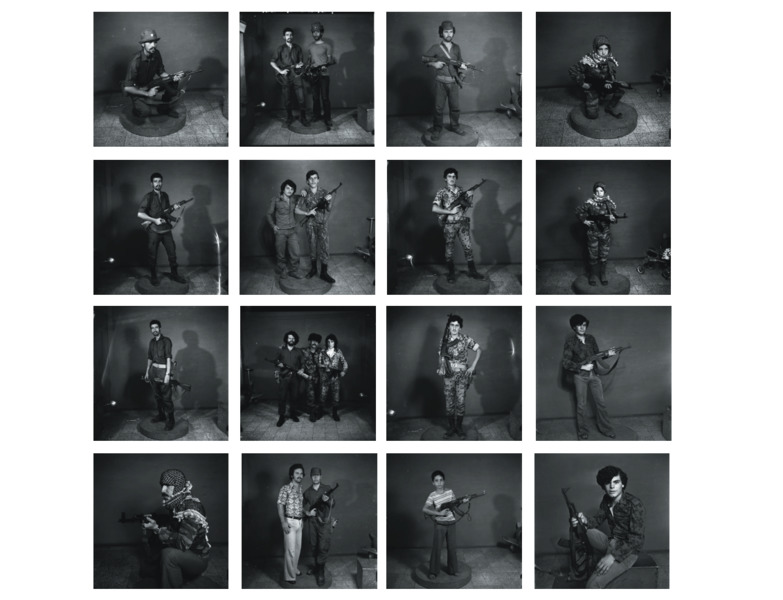
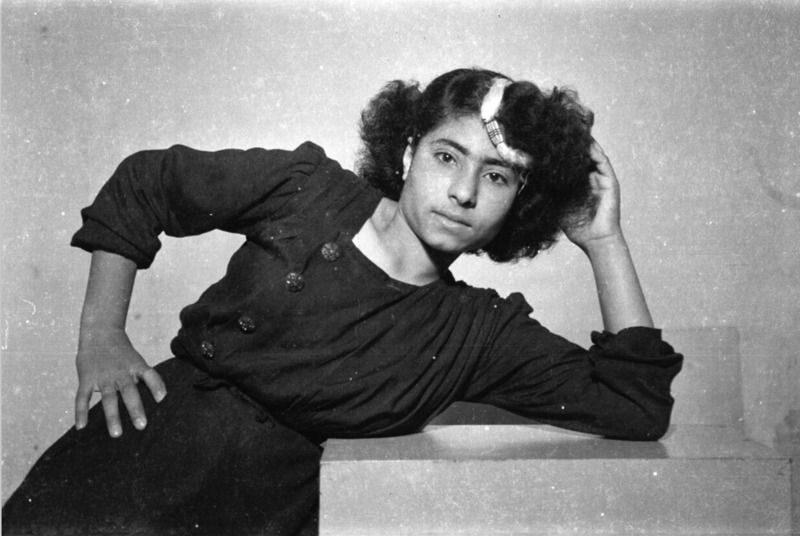
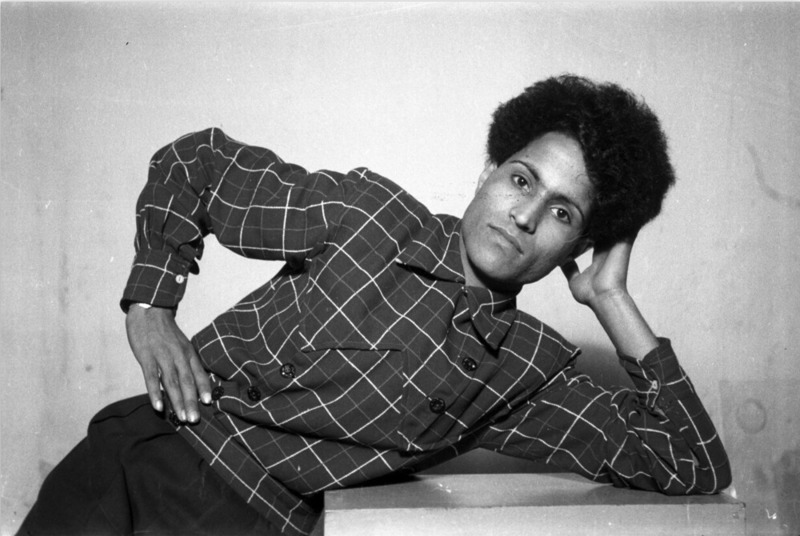
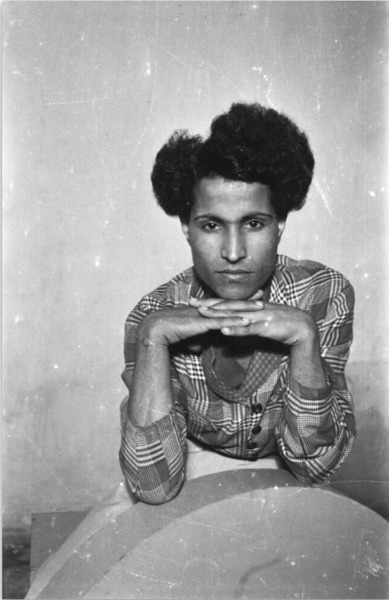
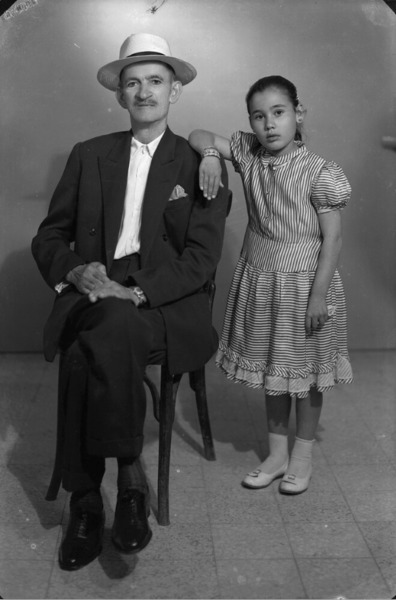
A man from Ghazieh and his daughter, late 1950s (from the series Objects of Study/Studio Shehrazade/Hashem El Madani/ Studio Practices)
Akram Zaatari
- Date
- 2006
- Medium
- Gelatin silver print on paper
- Dimension
- 39.5 x 26.5 cm, 53.2 x 42.5 x 3.5 cm (framed)
- Credit
TBA21 Thyssen-Bornemisza Art Contemporary Collection
- This artwork is part of the donation and long-term loan from TBA21 to the Museo Nacional Thyssen-Bornemisza.
Details
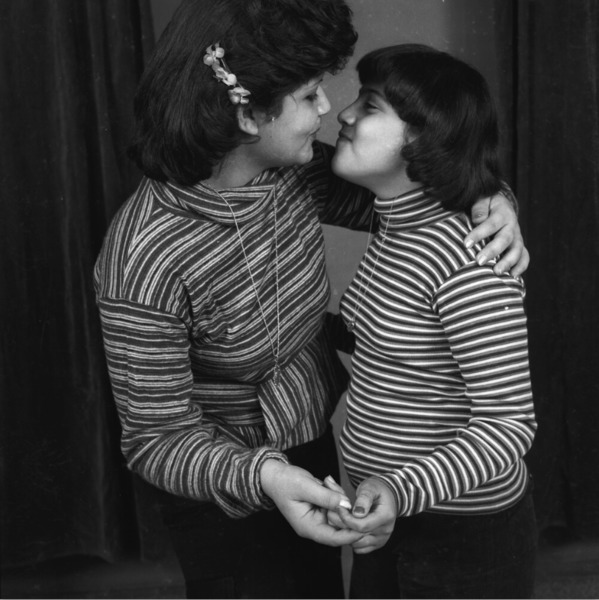
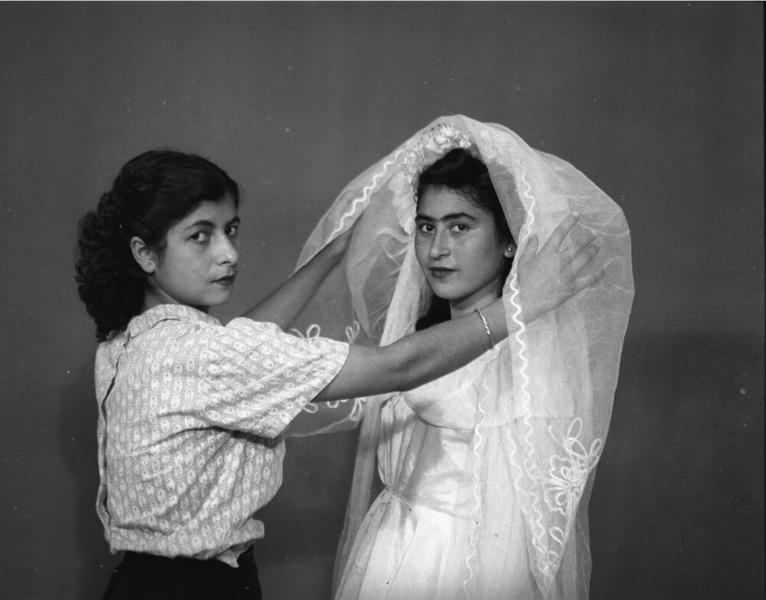
Starting in 1948, Hashem El Madani (1928–2017) began photographing men, women, and children in Saida, Lebanon, in his studio, which he called Shehrazade. Madani possessed a unique talent for storytelling through the lens of his camera. Anyone could walk into Studio Shehrazade and get their picture taken by the artist, who always shot his subjects against a spare backdrop and let them pose however they pleased. Many of these poses were inspired by the portrayals seen in films imported into Lebanon at the time. Until 1982, when a bomb blast destroyed his studio, Madani continued photographing citizens in Saida; by then he had captured images of 90 percent of Saida’s inhabitants, amassing over 75,000 pictures. In 1999, Akram Zaatari’s Arab Image Foundation, an organization dedicated to preserving, indexing, and studying photographic collections related to Arab culture, began collaborating with Madani in an effort to archive and share his photographs.
Hashem El Madani: Studio Practices comprises various grouping of photographs, selected and arranged by Zaatari. The images on display focus on the unfolding process of identity production among the predominantly younger generations who frequented the studio. Amid the tumultuous political landscape of Lebanon, marked by periods of prosperity, the disruptions of prolonged civil wars, sectarian conflicts, and Israel’s invasion in 1982, the Shehrazade studio captured a surprisingly vibrant and joyful local scene. The young models used photography as a canvas to experiment with their image and explore their desires. The photographs, more than mere portraits, assert cultural and political self-representation, and become a conduit for collective, rebellious self-construction.
In the studio’s confines, younger adults feel free to express intimacy with their same-sex friends, challenging paternalistic norms. This disruption is particularly significant for contemporary viewers as it counters one of the main political strategies perpetuating Islamophobia and racism toward Arabs in the West: homonationalism. Homonationalism, as articulated by queer scholar Jasbir Puar, describes the systematic oppression of queer, racialized, and sexualized groups in support of neoliberal structures and ideals. Through Zaatari’s curation of Madani’s photographs, previously obscured histories, practices, identities, and desires emerge, shedding light on overlooked and suppressed aspects of Lebanese society.
(Text written by TBA21 and used as wall label in the exhibition "The Ecologies of Peace", C3A, Córdoba, 2024)