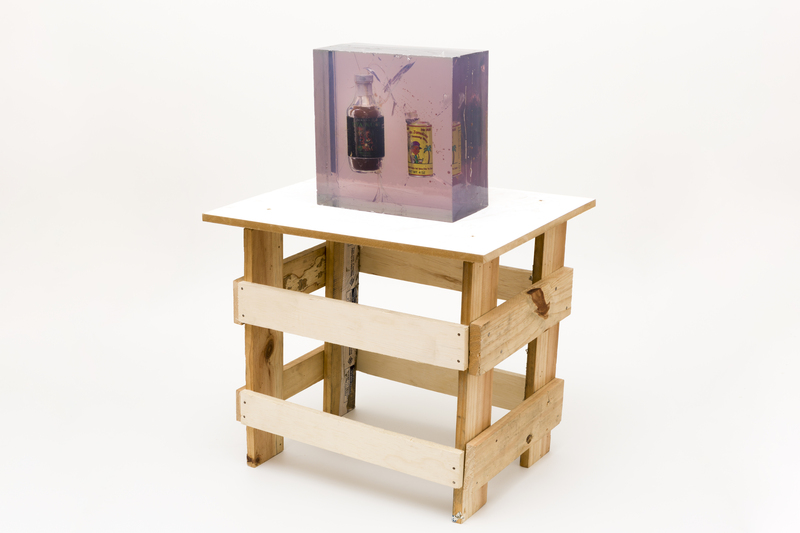
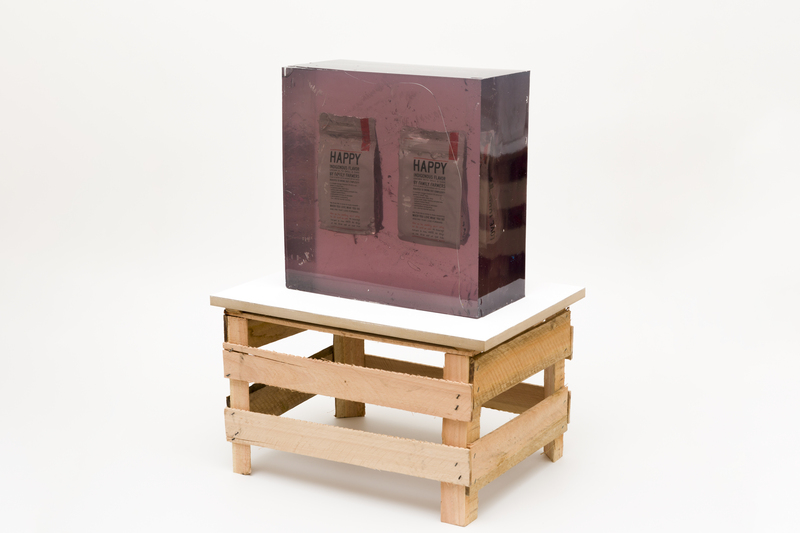
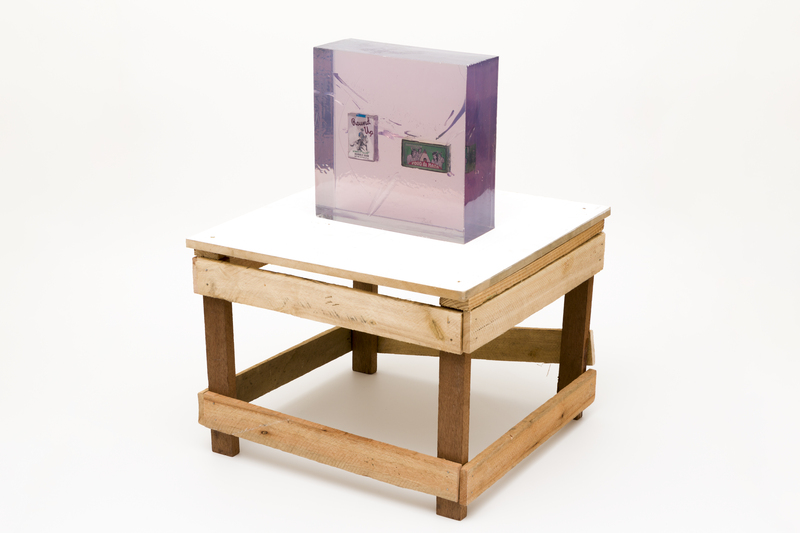
Untitled, from white ethnography series
Paulo Nazareth

Paulo Nazareth
Untitled, from white ethnography series, 2019
Efun on photo printing on cotton paper
90 x 67.5 cm (unframed)
101 x 78.5 x 4 cm (framed)
TBA21 Thyssen-Bornemisza Art Contemporary Collection
Paulo Nazareth
Untitled, from white ethnography series, 2019
Efun on photo printing on cotton paper
90 x 67.5 cm (unframed)
101 x 78.5 x 4 cm (framed)
TBA21 Thyssen-Bornemisza Art Contemporary Collection
Installation view: Abundant Futures. Works from the TBA21 Collection, Centro de Creación Contemporánea de Andalucía C3A, Córdoba, Spain, 2022
Photo: Roberto Ruiz
- Date
- 2019
- Medium
- B/w print and Efun chalk on cotton paper
- Dimension
- 90 x 67.5 cm, 101 x 78.5 x 4 cm (framed)
- Credit
TBA21 Thyssen-Bornemisza Art Contemporary Collection
- This artwork is part of the donation and long-term loan from TBA21 to the Museo Nacional Thyssen-Bornemisza.
Details
The peripatetic Brazilian artist Paulo Nazareth draws on his joint African and Indigenous heritage to perform restorative gestures that aim to return neglected histories of the Global South. In the “white ethnography series,” Nazareth collected black-and-white portraits of African communities from the internet. He then printed these on cotton paper, a support referencing the cotton trading routes, resource extraction in the African colonies, and plantation slavery. Faded, illegible, and de-individualized portraits emerge through the process of printing on cotton paper: neither faces nor objects, postures, and settings can be clearly identified as their contours and traits remain out of focus. The images are further obfuscated by white circles hand-drawn with efun, a chalk used for various cultural purposes in the Olukumi community. The process of veiling images depicting a specific Black subjectivity generates a sense of opacity that problematizes the concept of transparency in ethnographic research.
In Poetics of Relation (1990), poet and philosopher Édouard Glissant speaks of opacity as a tool for resisting approaches to knowledge that argue for the transparency of the “other”—a patronizing act that reduces the singularity and complexity of the subject, encouraging his/her objectification and subjection. The “white ethnography series” opens a critical reflection on the representation of Black persons and the residues of a colonial gaze stemming from and reinforcing Western cultural, geopolitical, and financial hegemony. Nazareth reverses a white ethnographic project by reclaiming and restoring images charged with colonial, scientific, and cultural memory.
(Text written by TBA21 and used as wall label in the exhibition "Abundant Futures", C3A, Córdoba, 2022)